
How to Check Criminal History in Gadsden
Start at the office that created the record. Gadsden Police keeps its own incident and crash reports. Gadsden Municipal Court keeps ordinance, traffic, misdemeanor, and municipal warrant records. A person taken into custody by GPD normally appears in the Etowah County Detention Center record, while state-law charges move through Etowah District Court and felony matters can later receive a Circuit Court case number. ALEA's fingerprint product is the final statewide self-review channel, not a substitute for a city report.
- Identify whether Gadsden Police, another city agency, the sheriff, or a state agency created the first record.
- Request the GPD incident or crash report at the city Records Division when the event began with city police.
- Ask Gadsden Municipal Court about city cases and municipal warrants; use the court channel for the docket.
- Check the Etowah jail roster and District or Circuit Court when custody or state-law charges moved beyond city jurisdiction.
- For a fingerprint-confirmed review of one's own statewide history, follow ALEA's self-review application process.
A blank result at one stop does not settle the issue. A released person may leave the current roster, a felony may move from a District number to a new Circuit number after indictment, and a city report will not appear as a court pleading. Search by record type, then compare identifiers and dates across the official channels.
Gadsden Police Records Moved
The Records Division moved on May 12, 2025, from the police complex to the Gadsden Municipal Court Complex at 1511 Campbell Avenue. The change put crash and incident copies beside the municipal court and magistrate or warrant functions. That is useful for a Gadsden criminal history search because a visitor can confirm whether the needed item is a police report, a municipal docket, or warrant information without confusing the city counter with the county Judicial Building.
The City of Gadsden's records-move notice documents the central location.
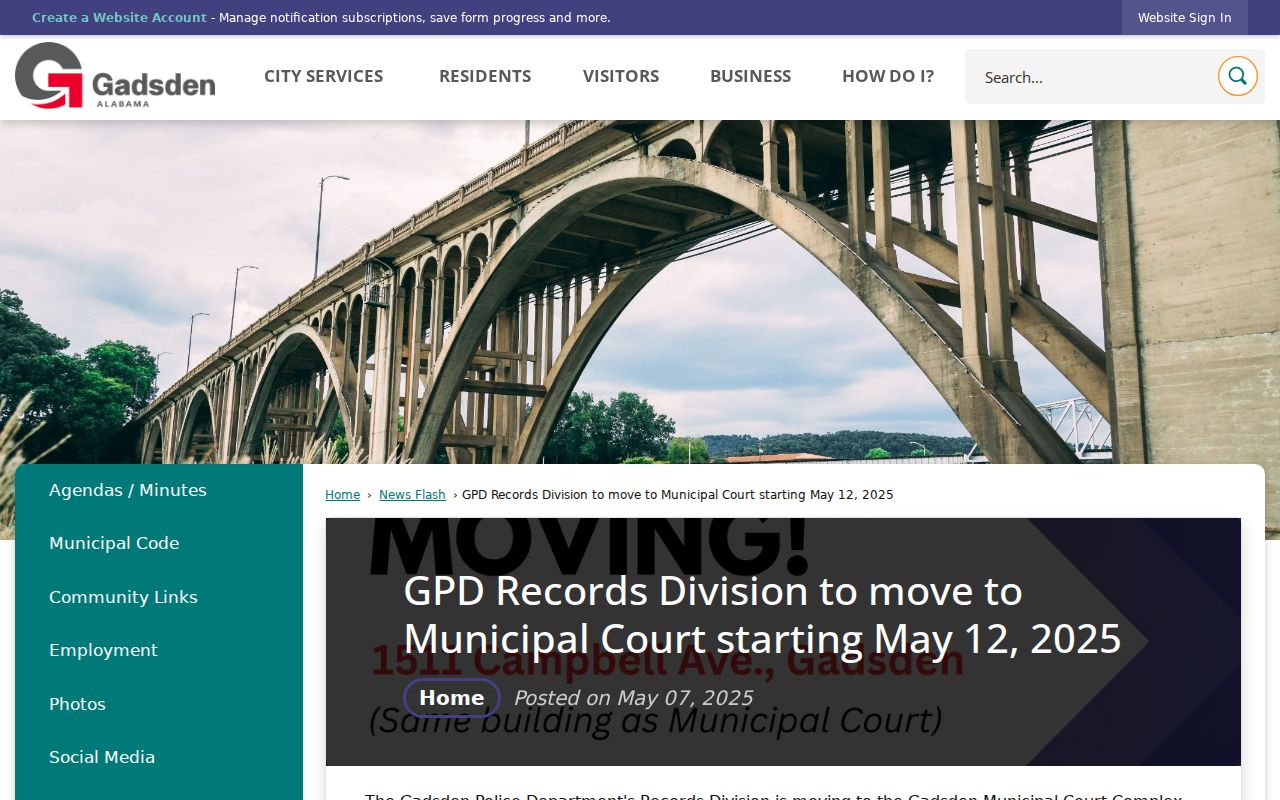
The move did not merge the records themselves. Police reports remain GPD records, and municipal case files remain court records under current city procedures.
The Gadsden Police Department
GPD says the department dates to 1846 and has about 100 sworn officers, plus more than 20 civilian staff working in dispatch, property, records, and information technology. Its Records Division is the direct source for city crash and incident reports. No free municipal name-search portal was located. The dependable route is the city counter or the police main line at 256-549-4500, with a focused request that identifies the date, place, report type, and report number when known.
Records staff are at 1511 Campbell Avenue on weekdays from 8:00 a.m. to 4:30 p.m. The city lists a $10 copy fee, payable by cash or check, and says photo identification is helpful. Detectives work by appointment during published morning and afternoon windows at 256-549-4630. The anonymous tip line, 256-543-2444, is an investigative lead channel, not a report-copy or docket-search service.
The official Gadsden Police page identifies the current records location and police service channels.
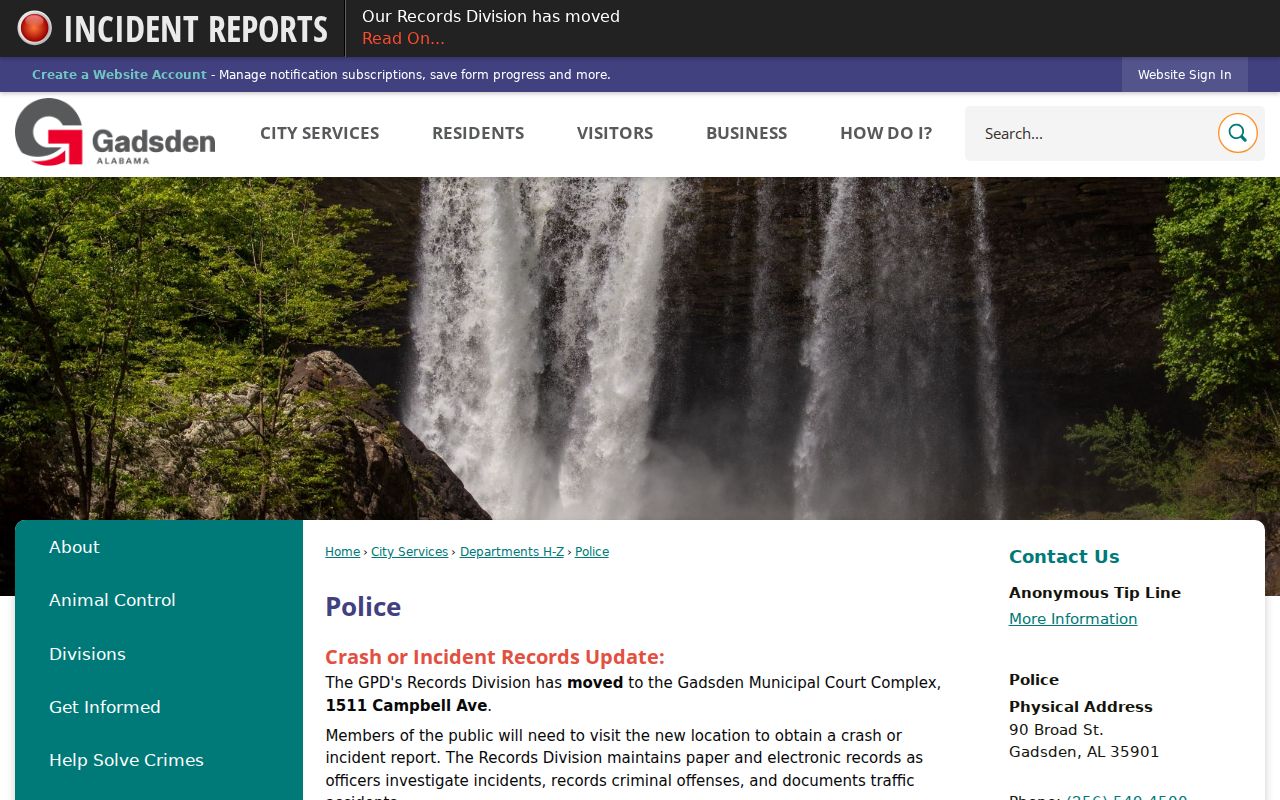
Checking the current city notice before a visit helps confirm whether the counter, detective unit, or court office holds the requested material.
Gadsden Report Copies Cost $10
A Gadsden incident report is the officer-created account of reported activity. A crash report documents a traffic event. Neither is the same as a booking entry or a court disposition. Ask for the exact product and give enough facts to locate it. Photo ID can help staff connect the requester with the right file, but access and redaction still depend on the record and the requester's status.
GPD Records Division
1511 Campbell Avenue
Gadsden, Alabama
256-549-4500
Monday-Friday, 8:00 a.m.-4:30 p.m.
Copies: $10, cash or check
The city's broader public-record policy routes ordinary requests through the City Clerk but preserves direct police and court channels. General copies are listed at $1 per page, electronic media at $15 per unit, and research after the first free half-hour at $25 per hour or part, generally prepaid. Police reports still follow the specific $10 schedule. The policy also identifies records that may be withheld, including pending-case information, ACJIC or NCIC data, confidential investigations, informants, crime-scene media, evidence, and warrant-execution material. When a report is partly protected, ask whether a releasable or redacted part can be provided.
Note: A police report may preserve an allegation even when the later Gadsden or Etowah court record shows dismissal, acquittal, or a changed charge.
Arrests and Bookings in Gadsden
A GPD arrest normally moves to the Etowah County Detention Center at 827 Forrest Avenue for booking. The sheriff's roster chooser separates Current Inmates from people released during the prior 48 hours, and JAIL View may show charge, bond, arresting-agency, booking, and release fields. The roster is a custody view. It does not provide the police narrative and does not establish the final prosecution outcome.
Start with the current cohort, then test the 48-hour release group if release may have occurred. If neither shows the person, contact the detention channel or request the GPD report. For charges, pleas, and dispositions, move to Gadsden Municipal Court or the appropriate Etowah court. The fuller Etowah County arrest history process explains the county roster and arresting-agency routes in depth.
Tracing a Gadsden Booking
A single Gadsden event can create four records. The GPD report documents police work. The Etowah Detention Center entry records intake and custody. A municipal or state court file follows the filed charge. Fingerprints from booking can feed ALEA's statewide repository, which later receives reported dispositions from courts. These layers update on different schedules and answer different questions.
Custody flow: Gadsden Police arrest › Etowah Detention Center booking › municipal or Etowah court › ALEA disposition update.
Charges can change after prosecutor review or grand-jury action. A felony often begins in District Court, then receives a new Circuit Court number after indictment. Search both stages if the early record seems to end after bind-over. Absence from the current jail roster only shows that the person is not in the displayed current cohort.
Gadsden Municipal Court Records
Gadsden Municipal Court holds city ordinance, municipal misdemeanor, traffic, and related warrant records. No free city name-search portal was found. Contact the court at 256-549-4542 or use the counter at 1511 Campbell Avenue. The warrant office uses 256-549-4595 and 256-549-4596. A court clerk can identify the local channel and docket, while police records staff handle the incident or crash report.
| Court Name | Gadsden Municipal Court |
|---|---|
| Case Types Heard | Municipal ordinances, traffic matters, city misdemeanors, and municipal warrant matters. |
| Case Lookup Channel | Court counter or phone; statewide paid trial-record access is a separate channel. |
| What the Docket Shows | Case number, charge, events, plea, disposition, sentence, and financial assessments when public. |
| Copies & Fees | Confirm the current municipal court copy terms with the clerk before ordering. |
The Gadsden Municipal Court information page is the official city source for court contact details.
The municipal court channel should be checked before assuming every city case belongs at the Etowah County Judicial Building.
Gadsden held a one-day Amnesty Court on March 25, 2026 for certain traffic, misdemeanor, failure-to-appear, fine, warrant, and pending-charge matters. The limited half-balance remission applied only to eligible adjudicated cases paid that day and excluded pretrial diversion. That event has expired and is not a standing warrant policy. It does show why a person addressing their own municipal warrant should call the court or warrant office for current instructions instead of relying on an old notice or an unsolicited demand for payment.
Gadsden Court or Etowah Court
Jurisdiction follows the charge. Gadsden Municipal Court handles its city cases. Etowah District Court handles most state-law misdemeanors and the early stages of many felonies. Etowah Circuit Criminal handles felonies after indictment and appeals from District Court or Gadsden Municipal Court. That split is why a broad Gadsden criminal history search may require more than one clerk.
| Record question | Start here | Next layer |
|---|---|---|
| City ordinance, traffic, or municipal warrant | Gadsden Municipal Court | Circuit Criminal if appealed |
| State misdemeanor | Etowah District Court | Circuit Court when an appeal applies |
| Felony arrest | District preliminary record | New Circuit case number after indictment |
| Police narrative | GPD Records Division | Not replaced by the court docket |
For Etowah trial-court data, a free name-search terminal is available at the Circuit Clerk's Suite 202 counter in the Judicial Building. Just One Look provides paid, case-by-case online access. City users should treat those as county and state trial-record channels, not as a promise that every municipal police report appears there.
Where Gadsden Records End Up
Recent activity appears closest to its source. GPD can have the incident report before a case is filed. The detention roster can show current custody before a disposition exists. The municipal, District, or Circuit clerk then preserves the prosecution record. Courts report qualifying dispositions to the Alabama Law Enforcement Agency's Criminal History Repository, but a lag or missing fingerprint match can make that history differ from the live docket.
Record flow: Gadsden Police › Etowah County Courts › Alabama Law Enforcement Agency
For a recent Gadsden event, check the police, booking, and court channels. For an older fully processed case, focus on the final court and, when reviewing one's own statewide history, ALEA. The Etowah County criminal history overview compares the county, correctional, and statewide systems without turning any one database into a complete record.
Gadsden Fingerprinting for Self-Review
Gadsden Police offers a local fingerprint service that can support ALEA's subject self-review process. The service costs $10, requires photo identification, and is offered Tuesdays and Wednesdays from 8:30 to 11:30 a.m. and 1:30 to 3:30 p.m. Call 256-549-4500 first to confirm the schedule and card requirements. The fingerprint counter captures prints; it does not itself issue an Alabama criminal-history report.
ALEA's Application to Review Alabama Criminal History Record Information requires a classifiable fingerprint set from an authorized law-enforcement agency, valid identification, the signed and witnessed or notarized application, and a $25 cashier's check or money order. This route is for a person reviewing their own fingerprint-linked Alabama history. The restricted Alabama Background Check System is not a general public people-search portal.
Gadsden Records Serve the County Seat
Gadsden had an estimated 33,086 residents in the Census Bureau's July 1, 2024 estimate, making it Etowah County's largest city and county seat. Its role creates a dense records landscape: city reports and court work sit at Campbell Avenue, while county government, the Judicial Building, and the sheriff or detention center occupy three separate Forrest Avenue addresses.
The Census Bureau's Gadsden QuickFacts provides the population and geographic context.
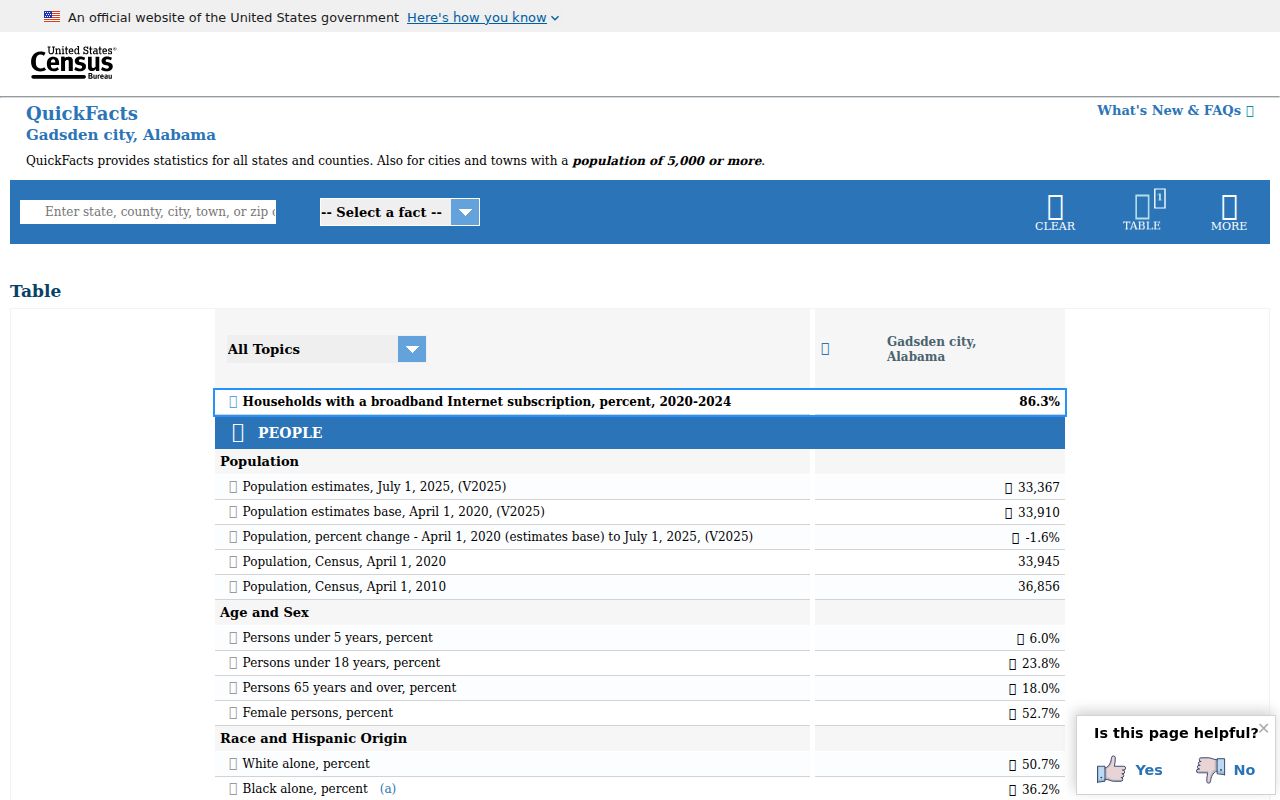
The city total describes service scale only. It is not a claim about crime, any neighborhood, or any resident.
Public Access Rules
Public access is record-specific. The Alabama Open Records Act supplies the baseline right to inspect and copy public writings, subject to express exceptions. Court access follows judicial rules, and ALEA repository data has separate dissemination limits. Gadsden may redact or withhold protected investigation material, confidential sources, restricted database information, victim or juvenile data, crime-scene evidence, and other exempt content. A focused request makes it easier to separate releasable parts.
Key Statutes:
Code of Alabama § 36-12-40 - gives the public a baseline right to inspect and copy public writings, subject to legal exceptions.
Code of Alabama § 41-9-601 - restricts obtaining or sharing criminal-history information through false pretenses or without authority.
Alabama Rules of Judicial Administration, Rule 33 - governs electronic court-record access while excluding sealed and confidential material.
For a police report, use GPD. For a municipal docket, contact the Gadsden court. For a state-law prosecution, use the Etowah clerk. That routing respects both public access and the legal boundary between a city report, a court file, and restricted statewide criminal-history data.